DrupalCon Chicago 2026: 25 Years, AI Everywhere, and Where Decoupled Fits
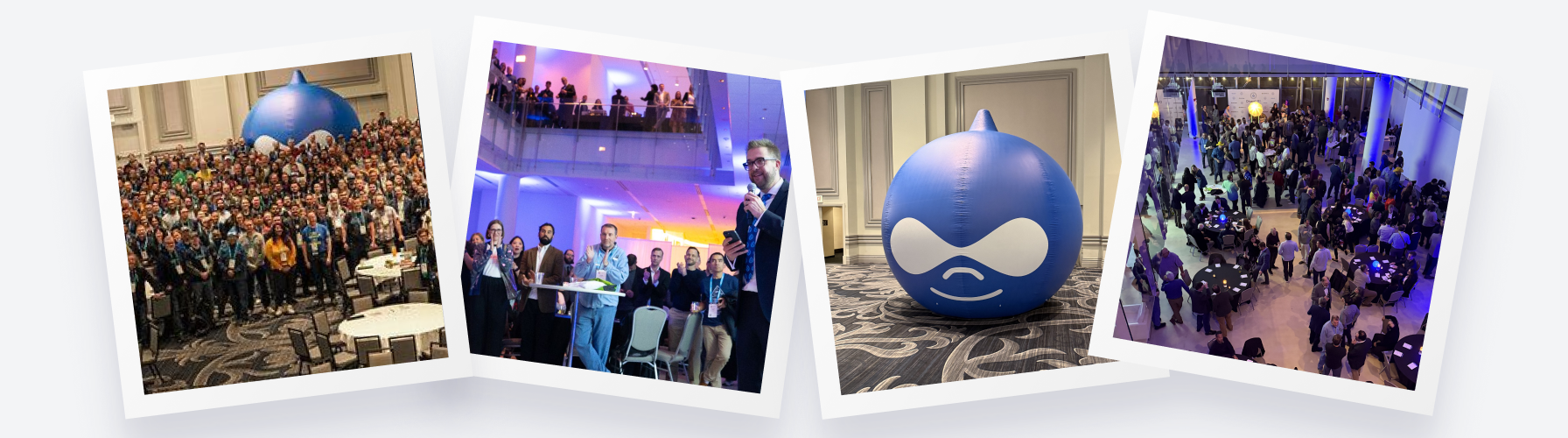
DrupalCon North America returned to Chicago this year, the same city where I attended my first DrupalCon over a decade ago.
Back then, the event drew around four thousand people and Drupal was at peak hype. This time, roughly 1,300 attendees, Drupal turning 25, and a keynote that felt more honest than usual about the challenges ahead.
The scale has changed, but walking through the venue I kept thinking about how much of what matters in this community still happens the same way it always has: sitting down with someone, sharing what you're building, asking what they need.
I learned that here in Chicago the first time, and it has shaped how I approach every DrupalCon since.
For Drupal, the announcements around AI and Canvas represent a real shift. For decoupled implementations, the picture is more nuanced.
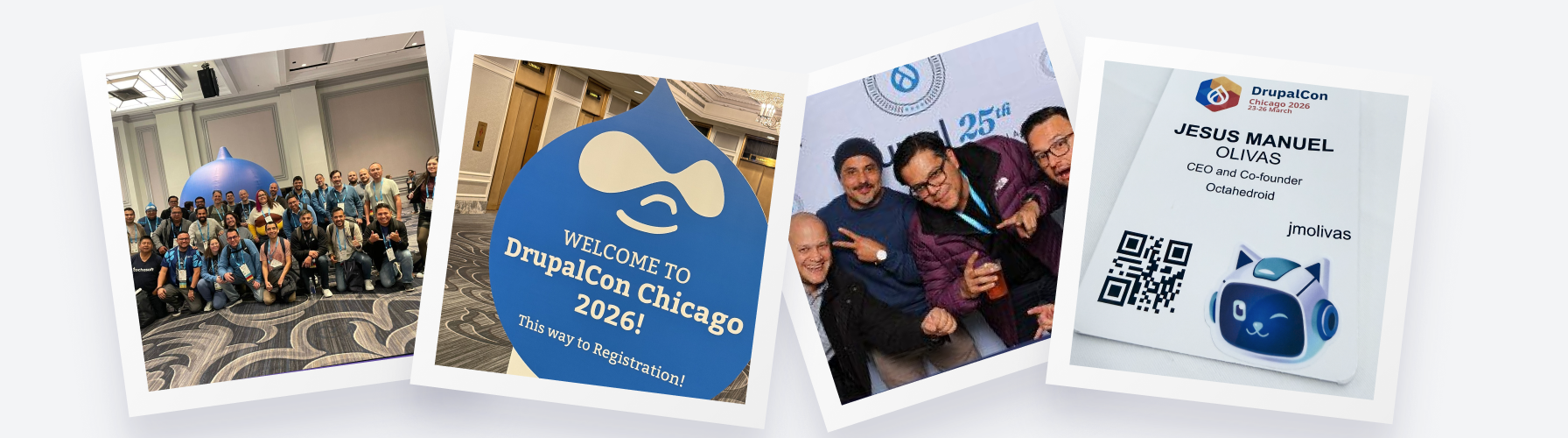
The 25th Anniversary and the Latin American Community
Twenty-five years is a long time for any open source project, and Dries acknowledged that during the keynote by borrowing a tradition from Fred Rogers, asking everyone for 10 seconds of silence to think about the people who helped them get where they are.
The anniversary was celebrated with a gala, and for me it was also a reminder of the Latin American Drupal community.
I attended alongside fellow community members from Costa Rica, Cuba, Colombia, Peru, Bolivia, and other Latin American countries who have been part of this ecosystem for years, organizing camps, contributing code, and showing up consistently. It matters to acknowledge that publicly.
The Latin American community has a long history in Drupal, and when I see retrospectives from the event that do not mention it, that stands out to me.
The Driesnote
The keynote was heavy on AI, and for good reason. Drupal has been investing in structured content for over a decade, and the argument Dries made is that this investment is now paying off in ways nobody predicted, because structured content is exactly what LLMs need to generate reliable output.
Here are the points that stood out to me:
Context Control Center (CCC)
The CCC is a module that centralizes organizational knowledge inside Drupal: brand guidelines, writing tone, content strategies per page type, customer profiles, analytics data. When an AI agent generates or edits content, it pulls the relevant context automatically based on what you are working on.
The demo showed a marketing manager at a fictional company using CCC to turn an unstructured copy deck into a production-ready product page, with the AI mapping content into the site's UI components while pulling brand voice and imagery guidelines from the CCC. This is the kind of AI implementation that makes sense to me because it is practical, bounded, and grounded in structured content.
Site Templates and the Marketplace
There are now eleven site templates covering nonprofits, education, events, healthcare, government, and SaaS, with both free and premium options that you can install directly from Drupal CMS 2.0.
For agencies, this creates a new channel to build a polished template once and sell it multiple times.
Drupal CMS 2.1
Dries announced the upcoming release of Drupal CMS 2.1, built on top of Drupal core, with a rebuilt installation experience, opinionated defaults, and Canvas as the default page-building experience for new installations.
All of this represents progress. Dries was more concrete about the path forward than in previous keynotes. But from where I sit, the question remains: where do decoupled implementations fit in this vision?
Canvas: A Different Tone This Year
In previous iterations, the relationship between Canvas and decoupled Drupal felt disconnected. Canvas was evolving as the next-generation page builder, but the roadmap seemed focused on traditional, coupled use cases.
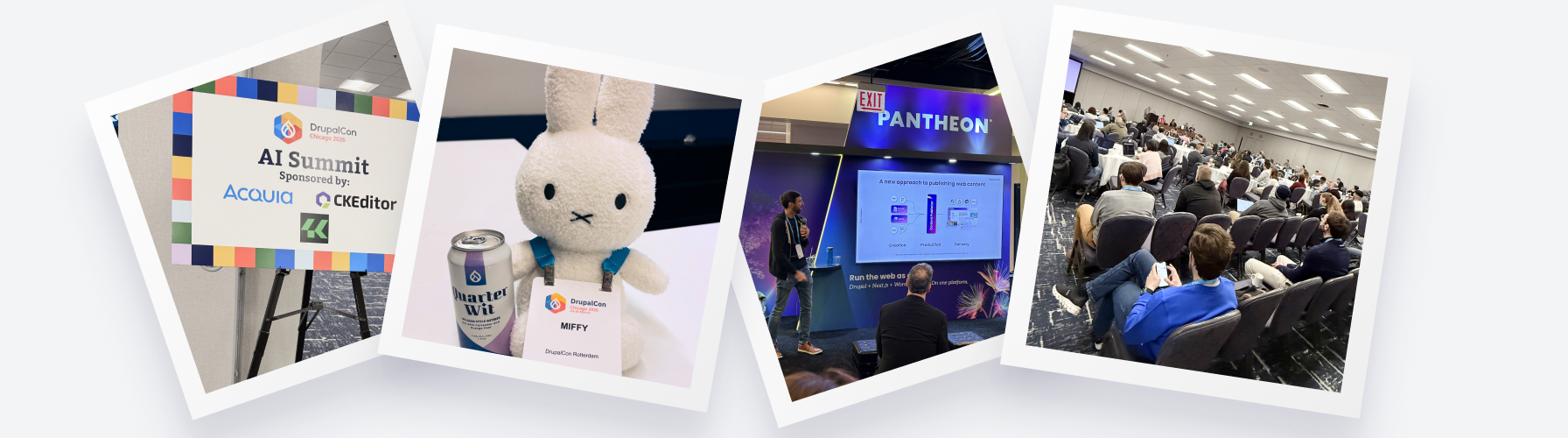
This year, I had some conversations with Lauri Eskola, the product manager for Canvas, and Bálint Kléri, who is leading the work on Code Components. We had the chance for exchanging ideas, demos, and points of view through Slack for some time, but I took advantage of being in person to discuss the Canvas roadmap in more detail, and the tone was entirely different from previous interactions.
A few things stood out. Code Components now support TypeScript and external libraries, which means you can write React components in TypeScript, use Tailwind and even import import external packages as Shadcn, BaseUI and build/publish them directly within Canvas.
Editing non-Canvas pages within Canvas is also now possible by mapping fields from a regular node to components in the Canvas interface. And Canvas Workbench was introduced as a tool for previewing components, which does not replace Storybook but offers a way to preview and test components within the Drupal environment for teams that do not have a Storybook setup.
I do think there is a risk of trying to cover too much ground and overcomplicating things, which is what tends to happen to most tools that try to do everything.
We told the Canvas team directly: if this roadmap aligns with what we are building in real client projects with Drupal Decoupled, we want to contribute in a meaningful way, specifically around Code Components and decoupled rendering. The alignment seems real this time. We will see if it holds.
Structured Content + AI + React
The keynote demos showed something we have been advocating for: structured content generated with AI and rendered with React components.
If you have a well-defined component library in React with typed props and a clear schema from GraphQL, you can feed that structure to an LLM, tell it to generate content using that schema, and get back data that maps directly to your components.
To make typed, schema-driven generation workable, start with a stable Drupal API layer. Our breakdown of GraphQL v3 vs v4 in Drupal maps the practical differences.
We have been building toward this with Drupal Decoupled for a while, and our stack (Drupal 11 + Next.js + GraphQL Compose + Storybook) already provides the type definitions, the component registry, and the data mapping layer that make AI generation fit naturally into the workflow.
There is also a practical fact worth mentioning: LLMs generate significantly better React code than Twig code because of the sheer volume of public examples and training data available. For decoupled projects, that is a real advantage.
Where Is the New Blood?
Look around at a DrupalCon and the lack of younger developers is hard to miss.
Within our own company, we see it clearly: new developers gravitate toward React, TypeScript, AI tooling, and modern frameworks, and Drupal on its own is not their first choice. But when you show them a decoupled Drupal project where they are writing React components, using GraphQL for data fetching, getting end-to-end type safety with TypeScript, and they can spin up a full development environment with a single command, the conversation changes.
If Drupal can meet developers where they already are while providing the enterprise content management layer that nothing else does as well, there is a path to attracting new talent. Without that, the community faces a sustainability problem.
AI Slop and What Actually Works
Beyond the keynote, the volume of AI content at the conference made me think about the broader state of AI in the CMS space.
A lot of the noise comes from repeated assumptions, which is why we keep revisiting popular AI claims in web development in a more technical, evidence-based way.
Dries was clear during the keynote: do not push code you do not understand, whether it was generated by AI or not. This is the same principle behind our human-assisted AI development framework for production systems, where AI output is treated like a draft that must earn its way into the codebase.
Within our own projects, we have seen AI deliver real value in bounded use cases like automated translations that generate the node, duplicate it, and handle the translation, saving about 80% of the manual work. That is practical AI, rather than a fancy demo that you cannot ship.
On a related note, a contributor who was actively pushing AI-generated code into Drupal core faced pushback during the event, including a formal request to ban them.
The situation resolved without a ban but with a clear boundary: do not push code you cannot explain or verify. It is good that the community is having these conversations now, openly, rather than waiting until the codebase suffers.
The Right Pieces Are There, But Will They Come Together?
Drupal's investment in structured content is paying off, and the convergence with React components and AI generation creates a real opportunity for decoupled implementations.
Some concerns from previous keynotes remain, though. There was still limited discussion of how Drupal plans to improve the decoupled editorial experience, no clear path for onboarding front-end developers who work with modern frameworks and have no interest in Twig, and the role of API-first approaches in the official roadmap remains unclear.
These topics matter to agencies like ours and to the enterprise clients we serve. While it is impossible to cover everything in a single keynote, this is the message Drupal sends to decision-makers outside the community, and the absence of these topics sends its own signal.
At Octahedroid, we will continue to invest in Drupal Decoupled, in practical AI implementations, and in the tools that deliver real value to our clients.
If the official roadmap catches up, we are ready to contribute. If it does not, we will keep building our own path forward.
If you're figuring out whether Drupal fits your stack or want to explore what a decoupled architecture can do for your organization, schedule a free call with me here.
We've been helping teams navigate this for over a decade, and we're always happy to share what we've learned.

About the author
Related posts
DrupalCon Chicago 2026: 25 Years, AI Everywhere, and Where Decoupled Fits
By Jesus Manuel Olivas, April 13, 2026DrupalCon Chicago 2026 brought real progress on AI and Canvas, but the decoupled story remains incomplete. Here is what we saw and where we think things are headed.
Should Your Team Replace the CMS with AI? — 5 Lessons from the Cursor vs Sanity Debate
By Jesus Manuel Olivas, March 31, 2026Should you replace your CMS with AI agents and markdown files? Here are five takeaways from the Cursor vs. Sanity debate to help you figure out what fits your team.